
First of all: This is a ready-made series based on content from AWS Skill Builder, entirely designed by AWS. The content is of high quality, so I have converted it into an article format to share with everyone.
DuyNCT
What is Amazon Elastic Kubernetes Service?
Amazon Elastic Kubernetes Service (Amazon EKS) is a managed container orchestration service that facilitates deploying, managing, and scaling Kubernetes applications in the AWS Cloud or on premises. Amazon EKS helps you provide highly available and secure clusters. Amazon EKS also helps you automate key tasks such as patching, node provisioning, and updates.
The need for container orchestration
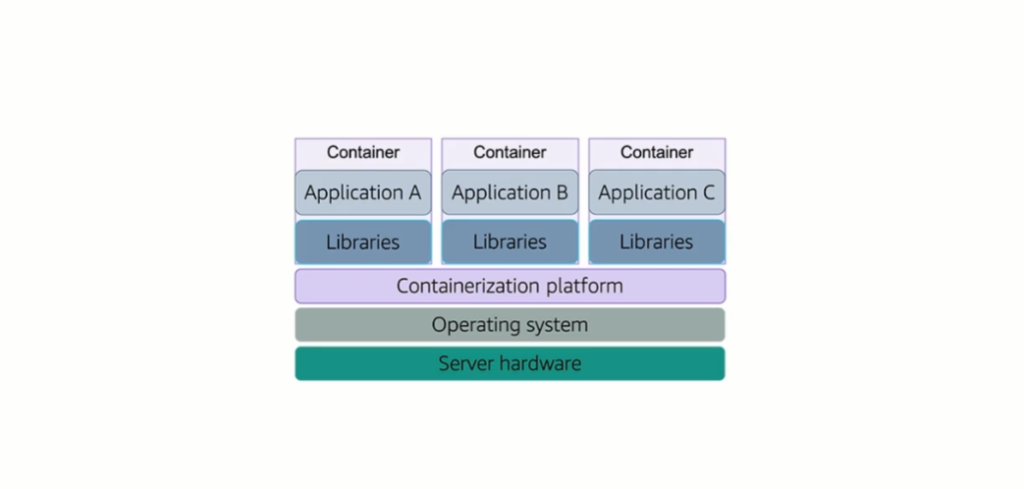
Containers provide a standard way to package your application’s code, configurations, and dependencies into a single object. They are lightweight and provide a consistent, portable software environment for applications to run and scale anywhere. Some of the popular use cases for containers include building and deploying microservices, running batch jobs, supporting machine learning applications, and moving existing applications into the cloud. Applications running in containers require a container orchestration platform to manage and scale deployments.
To watch the video about container orchestration, select the play button.
A container is a lightweight, highly portable virtualization solution that bundles an application and its dependencies into a single unit of compute. Because containers isolate software from the other layers, their code runs identically across different environments from development and staging all the way to production.
Containers are a popular choice to power modern microservices architectures. It’s important to consider scalability when you develop your environment. Running one or two containers on a single host is simple. What happens when you move into a full production environment with hundreds of hosts and maybe thousands of containers?
Container orchestration tools (or container management platforms) are used to automate the management, deployment, and scaling of containers.
Different management platforms might manage different aspects of your container system. Here are some of the main categories many of these platforms manage:
- Scheduling and placement of your containers
- Automatically scaling in or out the number of containers as appropriate
- Self-healing your services by automatically removing unhealthy containers and deploying new ones in their place
- Integration with the cloud and other services, such as networking services and persistent storage
- Security, monitoring, and logging for your system
Benefits of Amazon EKS
To view some of the benefits of running your Kubernetes applications on Amazon EKS, select each flashcard to flip it, then use the arrows to move to the next card.
- Managed Kubernetes service: Amazon EKS creates and manages the Kubernetes control infrastructure for you across multiple AWS Availability Zones to eliminate a single point of failure. In addition to managing the control plane, Amazon EKS can manage elements of the data plane (worker nodes), if you choose.
- Tightly integrated with AWS services: Amazon EKS is tightly integrated with other AWS services and features, such as Elastic Load Balancing for load distribution, AWS Identity and Access Management (IAM) for role-based access control, and Amazon Virtual Private Cloud (Amazon VPC) for pod networking.
- Build with the Community: AWS actively works with the Kubernetes community, including making contributions to the Kubernetes code base that help Amazon EKS users take advantage of AWS services and features.
- Confomant and compatible: Amazon EKS runs native, upstream Kubernetes. It is certified to be Kubernetes-conformant, so you can use all the existing plugins and tooling from the Kubernetes community. Applications running on Amazon EKS are fully compatible with applications running on any standard Kubernetes environment. You can migrate any standard Kubernetes application to Amazon EKS without needing to refactor your code.